4-Letter Domain Pricing Guide: What LLLL.com Names Sell For
What is a 4-letter .com worth? The frustratingly correct answer is that the range spans from registration fee to five figures, and the difference comes down to a handful of factors you can learn to evaluate quickly. This 4-letter domain pricing guide lays out the framework dealers actually use, so you can price a name — buying or selling — without guessing.
Factor One: Letters Only vs Mixed Patterns
The deepest and most liquid market is LLLL.com — four letters, no digits, no hyphens. There are 456,976 of them, all registered, all traded in an established wholesale and retail market.
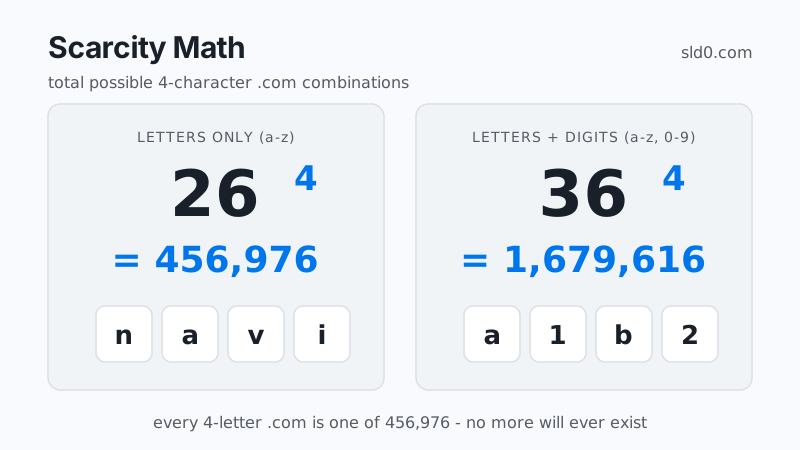
Add digits to the pattern and value falls off sharply. Mixed letter-and-digit names have no comparable investor floor; their worth is almost entirely end-user driven. That does not make them bad — a startup might pay well for the right mixed name — but there is no floor under them the way there is under letters-only inventory. Hyphens drop value further still.
So the first pricing question is simply: is it LLLL? If yes, you are in a market with real comparables. If no, you are pricing a one-off.
Factor Two: Chinese Premium Letters
Within LLLL.com, the next split is letter quality. The twenty Chinese premium letters — everything except a, e, i, o, u, and v — define the premium tier. All-consonant strings fit the pinyin-initial acronym patterns Chinese buyers favor, and since the 2015 demand wave they have carried a wholesale floor supported by investor demand alone.
A premium-letter LLLL.com can be valuable even if it spells nothing in any language. A vowel-heavy string gets no such support and must justify its price on other merits. This is usually the largest single price difference between two otherwise identical-looking four-letter names. You can see the composition of the premium tier directly in the letters-only section.
Factor Three: Pronounceability and Brandability
Pronounceable names — strings that read like a word or a plausible brand — command retail premiums because they appeal to end users rather than investors. Western startups are the typical buyers, and they pay for something they can put on a sign.
This cuts across the Chinese premium divide. A vowel-heavy name can be non-premium for Chinese investors yet highly brandable in English. When pricing, ask who the realistic buyer is: investor floor buyers care about letter quality; end users care about how the name sounds and what it could mean.
Factor Four: Acronym Fit
Four-letter strings map naturally onto company and product initials. Strings containing letters that commonly appear in acronyms — and especially strings matching the initials of real businesses — attract direct inquiries. This is hard to quantify, but it is why certain "random-looking" consonant strings sell while others sit.
The Price Tiers, in General Terms
Putting the factors together, the market sorts into broad tiers:
- Registration fee. Available names from the available list or successful uncontested drop catches. At this tier, mixed patterns and weaker letter strings dominate — which is exactly why it is the best value tier for a careful buyer.
- Three to low four figures. The wholesale-to-retail range for ordinary LLLL.com inventory. Non-premium letter names cluster at the bottom; solid premium-letter strings sit higher.
- Four to five figures. Pronounceable brandables, strong acronym fits, and the best premium-letter patterns. These are retail prices to end users, and they take patience to realize.
Treat any pricing you read online with suspicion — headline sales skew toward exceptional names, and asking prices are not selling prices.
Doing Your Own Research
The honest way to build pricing intuition is volume. Pull up detail pages across the spectrum — compare something like wqxr.com, a premium-letter consonant string, with a vowel-heavy name like euao.com — and note which factors separate them. Watch what enters the expiring pipeline and see which names attract competition at the drop. Over a few weeks of this, the tiers stop being abstract.
Pricing a 4-letter .com is not a formula, but it is not a mystery either: pattern first, letters second, pronounceability third, and comparables over hype at every step.