Expired 4-Letter Domains: How Drop Catching Works
Every LLLL.com is registered, but registrations lapse. Owners forget to renew, companies shut down, portfolios get abandoned — and when that happens to a 4-letter .com, the name eventually returns to the available pool. Expired 4-letter domains are one of the few remaining sources of quality short .com inventory, and drop catching is the mechanism by which they change hands. Here is how the process actually works.
The Domain Expiry Lifecycle
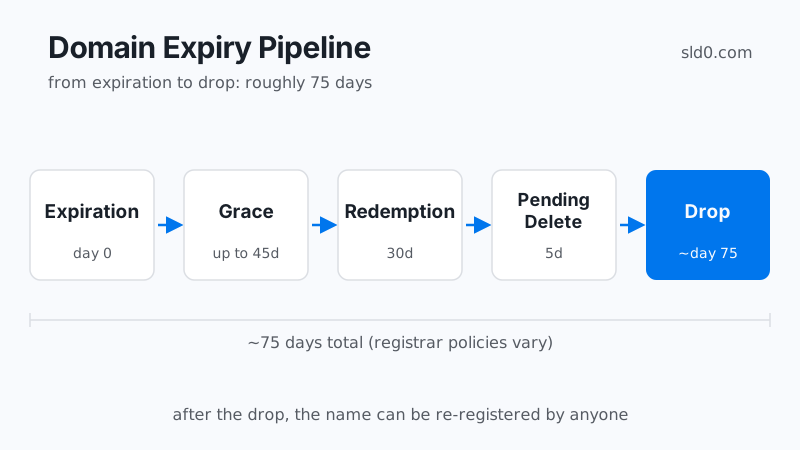
A .com domain does not become available the day after it expires. It moves through a fixed sequence that takes roughly 75 days in total:
Expiration
The registration term ends. The domain typically stops resolving or gets parked by the registrar, but the original owner can still renew at the normal price.
Grace period
For roughly the first 30 to 45 days after expiration (registrar policies vary), the owner can renew at standard or near-standard cost. Many registrars auction expired names to their own customers during this window — if the auction succeeds, the name transfers and never reaches the open drop. This is worth knowing: a name entering "expired" status is not guaranteed to ever become available.
Redemption period
If nobody renews or wins the auction, the domain enters redemption for about 30 days. Recovery is still technically possible but costs the owner a hefty redemption fee, so most names that reach this stage are genuinely gone.
Pending delete
The final stage lasts about five days. At this point the deletion is locked in — nobody, including the former owner, can stop it. On the final day the registry releases the name, and it becomes available for anyone to register. That release moment is the drop.
What Is Drop Catching?
When a pending-delete domain drops, it is a race measured in milliseconds. Whoever's registration request reaches the registry first gets the name at ordinary registration fee. Drop catching is the business of winning that race: specialized services submit automated registration attempts the instant the registry releases the name.
In practice you do not compete directly — you place a backorder with one or more drop-catching services before the drop date. If only one service's customers want the name and that service catches it, you get it (sometimes at a fixed fee). If multiple backorders land at the same service, the name goes to a short private auction among those bidders.
For desirable LLLL.com names, assume you will not be alone. Premium-letter strings and pronounceable names attract multiple backorders, so the "registration fee" outcome is reserved for names nobody else noticed.
Watching LLLL.com Enter the Pipeline
The practical edge is not speed — the catching services have that covered — it is preparation. Names give you weeks of warning as they move through grace and redemption, which is plenty of time to decide what you want and where to backorder it.
The expiring domains page tracks 4-letter and 4-character .com names as they enter and move through this pipeline. A workable routine:
- Scan weekly for new entries, then daily as your targets approach pending delete.
- Open the detail page for anything promising — a name like jvln.com — to check letter quality, pattern, and history before you spend a backorder.
- Set your ceiling in advance. If a catch turns into an auction, decide your maximum before bidding starts, not during.
Realistic Expectations
Most expiring LLLL.com names are ordinary, and many of the good ones will be caught by someone else or bid past your budget. That is normal. The practitioners who do well at this treat it as a numbers game: watch the pipeline continuously, backorder selectively, and let the occasional win come to them at a sane price.
If the drop route feels too competitive, the alternatives are the available 4-character list for names that can still be hand-registered, and the premium LLLL.com section for what the established letters-only market looks like. But for pure value per dollar, a well-chosen drop catch remains hard to beat.